

.svg)


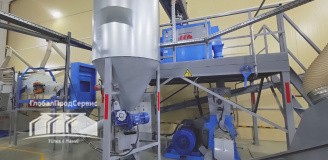


Hammer Crusher







Appointment
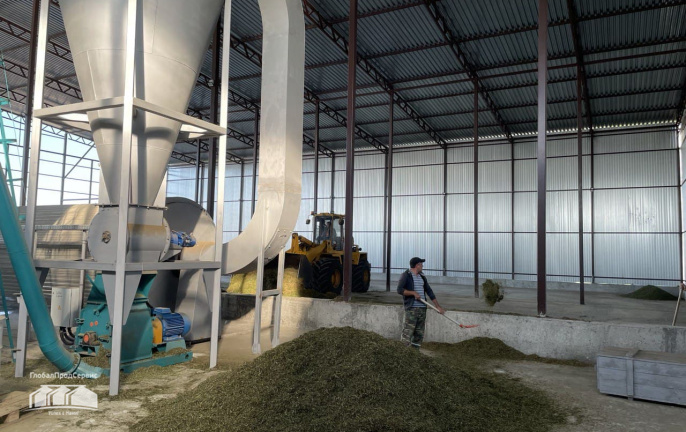
The crusher is designed to crush material before granulation.
Characteristic
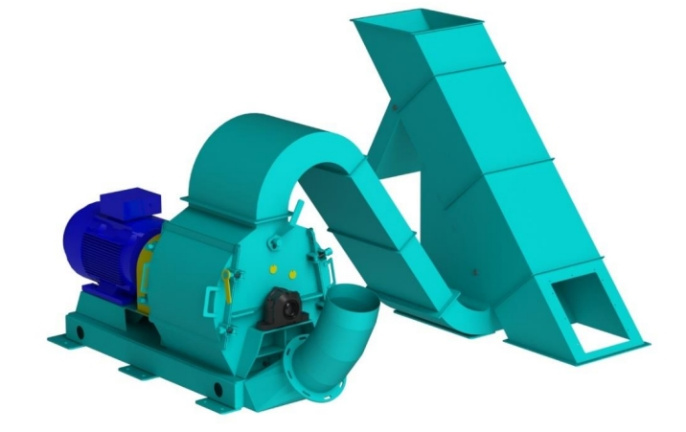
The hammer crusher consists of the following main components:
- Crusher body: It is made of high strength steel. Inside the housing there is a rotor with hammers and a stator with sieves.
- Rotor: This is the main working element of the crusher. It consists of a shaft on which hammers are mounted. The rotor rotates inside the crusher body, crushing the material.
- Hammers: These are metal plates mounted on a rotor. Hammers crush material by striking it and breaking it into smaller pieces.
- Stator: It is the stationary part of the crusher which consists of screens. A sieve is a metal grid with holes of a certain size. The material, passing through a sieve, is crushed to the desired particle size.
- Motor: It drives the rotor of the crusher. The engine can be electric or diesel, depending on the crusher model.
The principle of operation
The torque from the drive is transmitted to the rotor, on the axes of which the hammers are freely suspended. Hammers moving at high speed crush the material when they collide with it. Particles of crushed material that pass through the holes in the sieve are removed from the crushing zone into the outlet pipe.
Advantages
- High productivity: Hammer crushers are capable of processing large volumes of material in a short period of time, making them ideal for large industrial plants.
- High productivity: Hammer crushers are capable of processing large volumes of material in a short period of time, making them ideal for large industrial plants.
- Easy Maintenance: Hammer crushers require little maintenance and can be easily configured to handle different types of materials.
The crusher is designed to crush material before granulation.
The hammer crusher consists of the following main components:
- Crusher body: It is made of high strength steel. Inside the housing there is a rotor with hammers and a stator with sieves.
- Rotor: This is the main working element of the crusher. It consists of a shaft on which hammers are mounted. The rotor rotates inside the crusher body, crushing the material.
- Hammers: These are metal plates mounted on a rotor. Hammers crush material by striking it and breaking it into smaller pieces.
- Stator: It is the stationary part of the crusher which consists of screens. A sieve is a metal grid with holes of a certain size. The material, passing through a sieve, is crushed to the desired particle size.
- Motor: It drives the rotor of the crusher. The engine can be electric or diesel, depending on the crusher model.
The torque from the drive is transmitted to the rotor, on the axes of which the hammers are freely suspended. Hammers moving at high speed crush the material when they collide with it. Particles of crushed material that pass through the holes in the sieve are removed from the crushing zone into the outlet pipe.
- High productivity: Hammer crushers are capable of processing large volumes of material in a short period of time, making them ideal for large industrial plants.
- High productivity: Hammer crushers are capable of processing large volumes of material in a short period of time, making them ideal for large industrial plants.
- Easy Maintenance: Hammer crushers require little maintenance and can be easily configured to handle different types of materials.
Advantages of the equipment

Robust construction

Stable and reliable production

Maximum efficiency

Easy to operate

Easy maintenance

It will save space

Low maintenance costs

Long service life


