.svg)


IR analysis of raw materials to measure the quantitative indicators of fat, protein, and fiber content
Globalprodservice Company provides IR spectroscopy service:
- express determination of the oil content index (mass fraction of fat) in the composition of oilseed processing products (cake, meal)
- express determination of the protein content in vitamin and herbal granules (VTG)
by measuring the optical characteristics of the prepared analyzed samples in the near infrared region of the spectrum.
Oil content index (mass fraction of fat)
One of the key indicators of the quality of crops such as rapeseed, sunflower, flax, and their processed products (cake, meal) is the oil content. The oil content of seeds is usually understood as the specific presence of crude fats and fat-like substances in them.
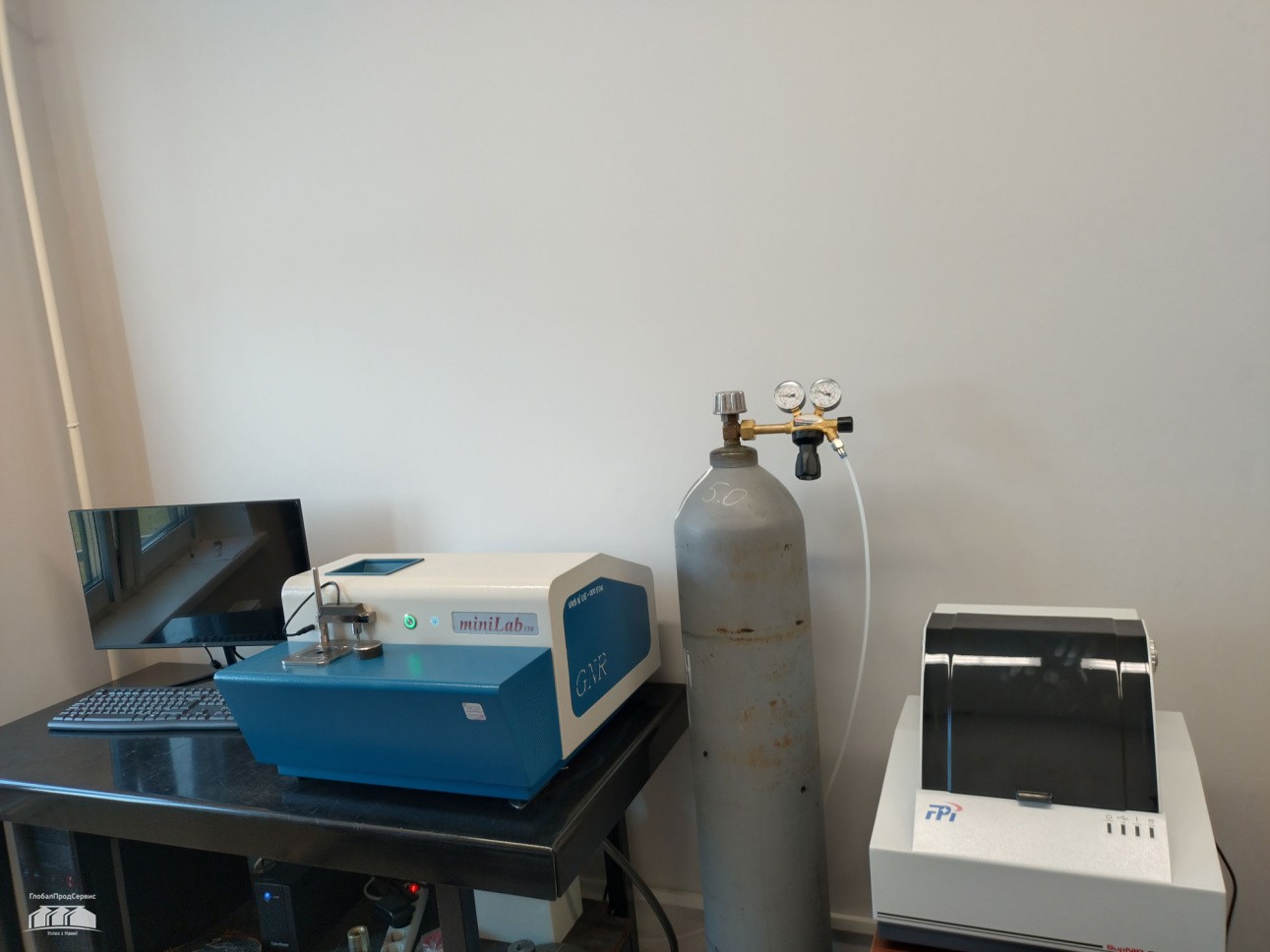
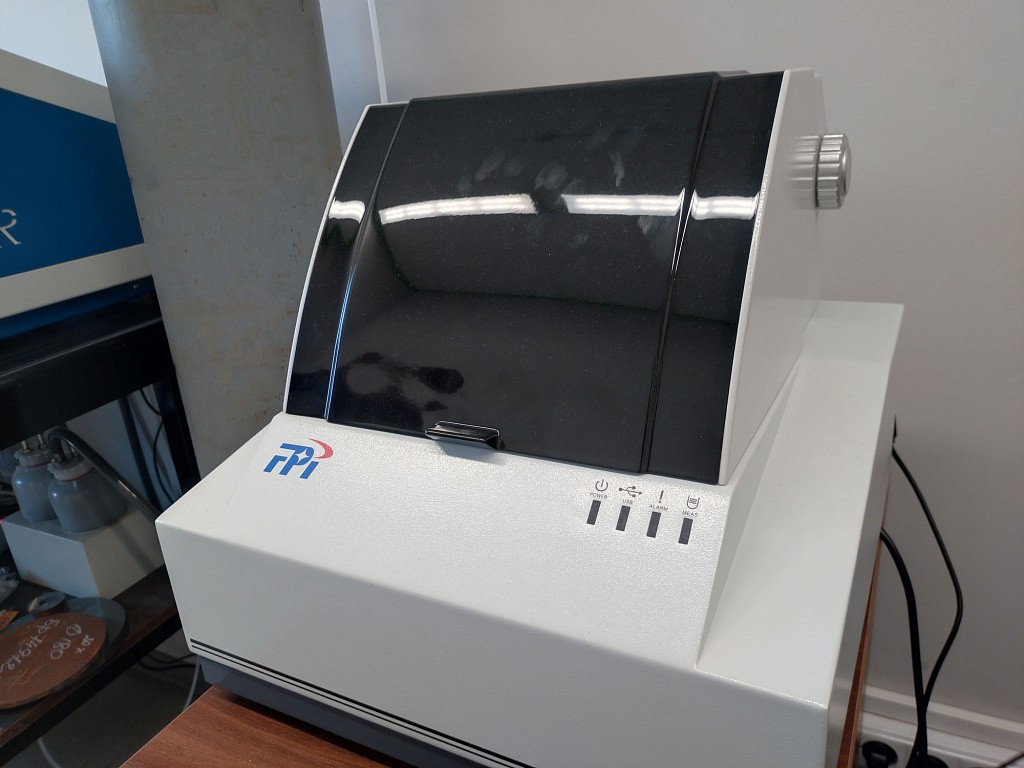
The instrumental base for quality control is a special device infrared analyzer (IR analyzer). The method requires a minimum of sample preparation, which is limited to drying and/or grinding of the analyzed cake (a product of processing oilseeds).
The instrumental base for quality control is a special device infrared analyzer (IR analyzer). The method requires a minimum of sample preparation, which is limited to drying and/or grinding of the analyzed cake (a product of processing oilseeds).
Requirements for cake samples for IR analysis
The main conditions include:
- Sample: ready-made CAKE (rapeseed, soy, sunflower)
- Sample weight: not less than 250 g. The sample is placed in a hermetically sealed container.
- Sample temperature: must correspond to the ambient temperature in the laboratory (from 15°C to 30°C). If the sample temperature is different, it is kept for 1 hour at the measurement temperature.
- Sample moisture: samples should be dry (humidity 8-12%)
- Crushing:
- If the cake is in the form of solid pieces or granules, it is pre-crushed in a mortar using a pestle, and then finally crushed in a grinding device in portions of 5-7 g for 15 seconds.
- Bulk samples are crushed in a crushing device without prior preparation.
- The particle size after grinding should not exceed 1 mm in any linear dimension.
- It is necessary to avoid heating the shredding device by taking breaks in operation to cool it.
- Sample storage: the mixed sample is stored at the measurement temperature (15-30 °C) for no more than four days.
- Storage containers: glass or plastic containers (jars) with hermetically sealed lids with a capacity of at least 250 cm3 are used.
These requirements ensure the accuracy and reproduction of the results of the IR analysis of the cake. When working with samples, it is necessary to strictly follow the procedure, since the particle size and sample preparation conditions significantly affect the measurement result.

Protein indicators (% protein content)
The protein content is a key indicator of the quality of vitamin and herbal granules, one of the main criteria for the nutritional value of VTG. Its importance is due to its biological function: proteins are a source of essential amino acids for animals and the economics of feeding: high-protein granules reduce the need for expensive protein supplements, as well as standardization - protein content standards are fixed in GOST and technical specifications at VTG.
Typical ranges for different types of VTG (for dry matter):
Alfalfa granules: 16-22 %;
bean and cereal mixtures: 14–19 %;
grass flour of various grasses: 12–18 %;
grain granules: 8-14%.
Note: The specific values depend on the phase of grass harvesting, agricultural techniques, and granulation technology.
Requirements for samples of vitamin and herbal granules for IR analysis
The main conditions include:
- Sample: vitamin and herbal granules (alfalfa, herbal flour, mixed herbs)
- Shape: the granules must remain intact (not be crushed to powder unnecessarily)
- Uniformity of granule composition: absence of large inclusions, lumps, and impurities
- Uniformity of granule size: preferably ± 1 mm of the average diameter (e.g. 3-5 mm). Strong heterogeneity causes light scattering and errors
- Uniformity of granule size: preferably ± 1 mm of the average diameter (e.g. 3-5 mm). Strong heterogeneity causes light scattering and errors
- Humidity: 8-14%
- if humidity is >14%: dry at 40-50°C to the target range;
- if humidity is <8%: do not artificially moisten (this will disrupt the granule structure and calibration dependence).
- Sample weight: at least 500 g. The sample is placed in a hermetically sealed container.
- Sample temperature: must correspond to the ambient temperature in the laboratory (from 18°C to 25°C). If the sample temperature is different, keep the sample in the laboratory for 30 minutes before measuring to equalize the temperature. It is forbidden to introduce cold/heated samples (condensation or distortion of the spectrum is possible).
- Storage of the sample before analysis: in an airtight glass or plastic container at room temperature, away from direct sunlight and sources of moisture.
- Shelf life: no more than 7 days (to minimize changes in humidity and biochemical processes).
When transferring the sample to the laboratory, it is necessary to inform:
- botanical composition (alfalfa, various grasses, cereals, etc.);
- production technology (direct granulation, flour, extrusion);
- the presence of additives (cakes, molasses, synthetic components);
- batch and date of manufacture.
These requirements ensure the accuracy and reproduction of the results of the IR analysis for protein content.
Globalprodservice has a staff of experienced specialists, which allows us to work with various types of raw materials: a number of food products, including compound feeds, grains, legumes, oilseeds and their processed products, promptly perform express analysis and guarantee:
- high measurement accuracy;
- the speed of obtaining results;
- full compliance with industry standards.
Advantages of rapid analysis using an IR analyzer:
Speed: analysis of the finished product takes less than one minute
Accuracy: The built-in InGaAs light receiver ensures high analysis accuracy.
Simple sample preparation: grinding to less than 1 mm, without reagents and high temperature treatment
Flexibility: analysis of different types of oilcake (sunflower, soy, rapeseed), the ability to work with small volumes
Documentation and support: protocols with analysis data, consultations on the results
Based on infrared spectroscopy (NIR), the analysis is performed in the spectral range of 1000-2500 nm, measuring oil content, and also allows you to determine such indicators as: fiber, fat, starch, moisture, protein, calcium, phosphorus, acid number, amino acids.
Stages of service provision: