.svg)




Herb seed preparation lines


A high harvest does not start from the field - it starts from the seed. This is especially true for perennial and annual grasses: clover, alfalfa, fescue, timothy, starling. Their seeds are tiny, moody, but incredibly valuable. Due to the small size of seeds, their complex shape and the proximity of physico-mechanical properties to weed seeds, the cleaning and sorting of grass seeds requires a particularly precise and multi-stage approach, which is implemented on such lines.
For the separation of double, triple seeds, multi–seeded grains and ears, as well as peeling and scarification, the preparation of grass seeds should include a special stage - cleaning on clover grinders and brush machines. Seed preparation on clover grinders is recommended for legume seeds, and on brush machines for cereals. In addition, grass seeds do not need pickling, so there is no pickling agent in such lines.
Processed seeds yield +20-25% yield and become a high margin commodity.
Appointment
The main purpose of the grass seed preparation line is to obtain high—quality seed material for perennial and annual fodder grasses (clover, alfalfa, timothy, fescue, etc.) by sequentially cleaning, sorting, calibrating and preparing seeds for sowing or storage.
Such lines make it possible to isolate conditioned, clean, high-grade seeds from a complex, heterogeneous pile of seeds that meet state standards (GOST) for germination, purity and humidity.
The herb seed preparation line is not just an equipment. This is an entry into the high—margin segment of agribusiness, where quality determines price and technology determines profit.
Technology
Grass seeds are small—seeded, often similar in size to weed seeds. Conventional grain cleaning machines cannot handle their cleaning. The grass seed preparation line solves this problem by using a comprehensive separation based on physical and mechanical properties.:
- In terms of windage, the air flow removes light debris (dust, puny seeds).
- In terms of thickness and width, sieve separators filter out foreign fractions.
- In length, trier cylinders separate seeds, for example, clover from mustard.
- By specific gravity, pneumatic sorting tables secrete heavy, viable seeds.
- According to the coefficient of friction and the condition of the surface, special machines (slides, spiral cleaners, electromagnetic separators) remove seeds with a rough shell (often weeds).
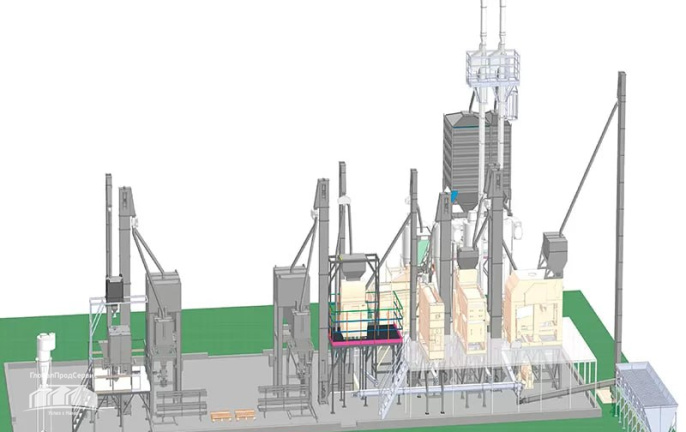
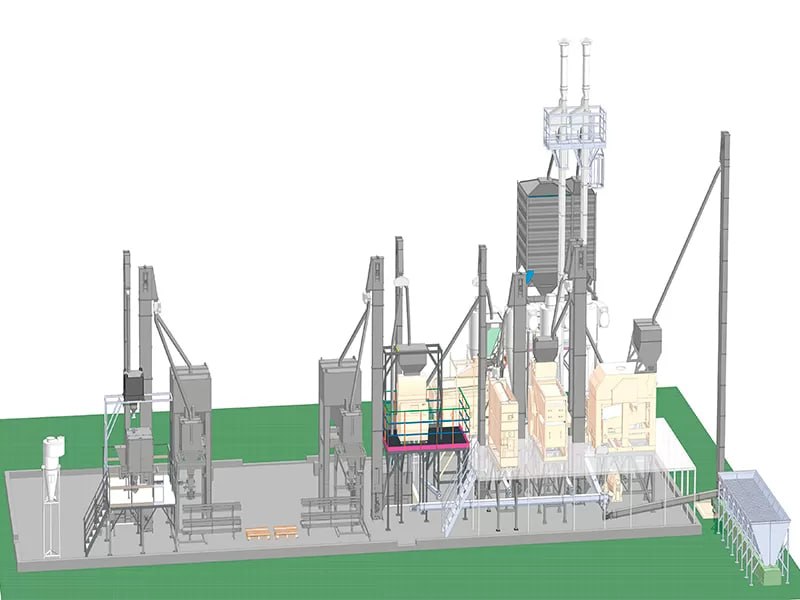
The grass seed preparation line is a technological conveyor of interconnected equipment that turns an uncleaned pile - with flower bags, weeds, and dust — into elite reproduction seeds ready for sowing or sale.
An example of a complete line (for clover, capacity 500 kg/h):
- Air-screen separator (pre-cleaning)
- Kleverotka
- Trier block (2-3 cylinders)
- Pneumatic sorting table
- Seed cleaning slide
- Spiral Cleaner
- Etching unit
- Automatic Filling Machine
Features of grass seeds that affect technology:
- The seeds are small (1-3 mm), which makes it difficult to separate them from the fine litter.
- Similarity in size and sailiness to weed seeds.
- The presence of seeds in flower pouches, axils, and spikelets requires additional treatment.
- High sensitivity to mechanical damage.
- The need for precise sorting by density, friction, and shape.
A typical seed line for cereals and legumes includes the following stages::
- Primary (mandatory) cleaning on air-sieve separators of the MUZ series.
- Special cleaning on clover grasses (cereal grasses) and brush (bean grasses) machines.
- Secondary (seed) cleaning on TOP series fine cleaning machines.
- Sorting by length on BT series trier blocks.
- Sorting by specific gravity on pneumatic columns of the SP series.
- Color sorting on photo separators.
- Packing of seeds in bags and big bags at the TORBA series packing stations.
Advantages
- High purity of seeds — up to 98-99 %
- Increased germination and germination - by selecting strong seeds
- Obtaining elite class seeds for certification and sale
- The possibility of processing complex crops - clover, alfalfa, grass mixtures
- Reducing dependence on imports - the opportunity to use your own seeds
- Preparation of grass mixtures - precise dosing of components for pastures, hayfields and lawns.
Grass seed preparation lines are essential equipment for modern livestock farms, seed—growing enterprises, and lawn mix manufacturers. They make it possible to turn low-quality raw materials into valuable seed material, ensuring high yields of forage lands, durability of herbage and economic benefits. Thanks to precise cleaning and calibration, such lines become the foundation of sustainable and efficient crop production.
If you work with forage crops, such a line is not a luxury, but the key to sustainable agribusiness.
Manufacturer: CJSC Borisov Plant "Metallist". Polymya: The Company Brand
The main purpose of the grass seed preparation line is to obtain high—quality seed material for perennial and annual fodder grasses (clover, alfalfa, timothy, fescue, etc.) by sequentially cleaning, sorting, calibrating and preparing seeds for sowing or storage.
Such lines make it possible to isolate conditioned, clean, high-grade seeds from a complex, heterogeneous pile of seeds that meet state standards (GOST) for germination, purity and humidity.
The herb seed preparation line is not just an equipment. This is an entry into the high—margin segment of agribusiness, where quality determines price and technology determines profit.
Grass seeds are small—seeded, often similar in size to weed seeds. Conventional grain cleaning machines cannot handle their cleaning. The grass seed preparation line solves this problem by using a comprehensive separation based on physical and mechanical properties.:
- In terms of windage, the air flow removes light debris (dust, puny seeds).
- In terms of thickness and width, sieve separators filter out foreign fractions.
- In length, trier cylinders separate seeds, for example, clover from mustard.
- By specific gravity, pneumatic sorting tables secrete heavy, viable seeds.
- According to the coefficient of friction and the condition of the surface, special machines (slides, spiral cleaners, electromagnetic separators) remove seeds with a rough shell (often weeds).
The grass seed preparation line is a technological conveyor of interconnected equipment that turns an uncleaned pile - with flower bags, weeds, and dust — into elite reproduction seeds ready for sowing or sale.
An example of a complete line (for clover, capacity 500 kg/h):
- Air-screen separator (pre-cleaning)
- Kleverotka
- Trier block (2-3 cylinders)
- Pneumatic sorting table
- Seed cleaning slide
- Spiral Cleaner
- Etching unit
- Automatic Filling Machine
Features of grass seeds that affect technology:
- The seeds are small (1-3 mm), which makes it difficult to separate them from the fine litter.
- Similarity in size and sailiness to weed seeds.
- The presence of seeds in flower pouches, axils, and spikelets requires additional treatment.
- High sensitivity to mechanical damage.
- The need for precise sorting by density, friction, and shape.
A typical seed line for cereals and legumes includes the following stages::
- Primary (mandatory) cleaning on air-sieve separators of the MUZ series.
- Special cleaning on clover grasses (cereal grasses) and brush (bean grasses) machines.
- Secondary (seed) cleaning on TOP series fine cleaning machines.
- Sorting by length on BT series trier blocks.
- Sorting by specific gravity on pneumatic columns of the SP series.
- Color sorting on photo separators.
- Packing of seeds in bags and big bags at the TORBA series packing stations.
- High purity of seeds — up to 98-99 %
- Increased germination and germination - by selecting strong seeds
- Obtaining elite class seeds for certification and sale
- The possibility of processing complex crops - clover, alfalfa, grass mixtures
- Reducing dependence on imports - the opportunity to use your own seeds
- Preparation of grass mixtures - precise dosing of components for pastures, hayfields and lawns.
Grass seed preparation lines are essential equipment for modern livestock farms, seed—growing enterprises, and lawn mix manufacturers. They make it possible to turn low-quality raw materials into valuable seed material, ensuring high yields of forage lands, durability of herbage and economic benefits. Thanks to precise cleaning and calibration, such lines become the foundation of sustainable and efficient crop production.
If you work with forage crops, such a line is not a luxury, but the key to sustainable agribusiness.
Advantages of the equipment

Robust construction

Stable and reliable production

Maximum efficiency

Easy to operate

Easy maintenance

It will save space

Low maintenance costs

Long service life